

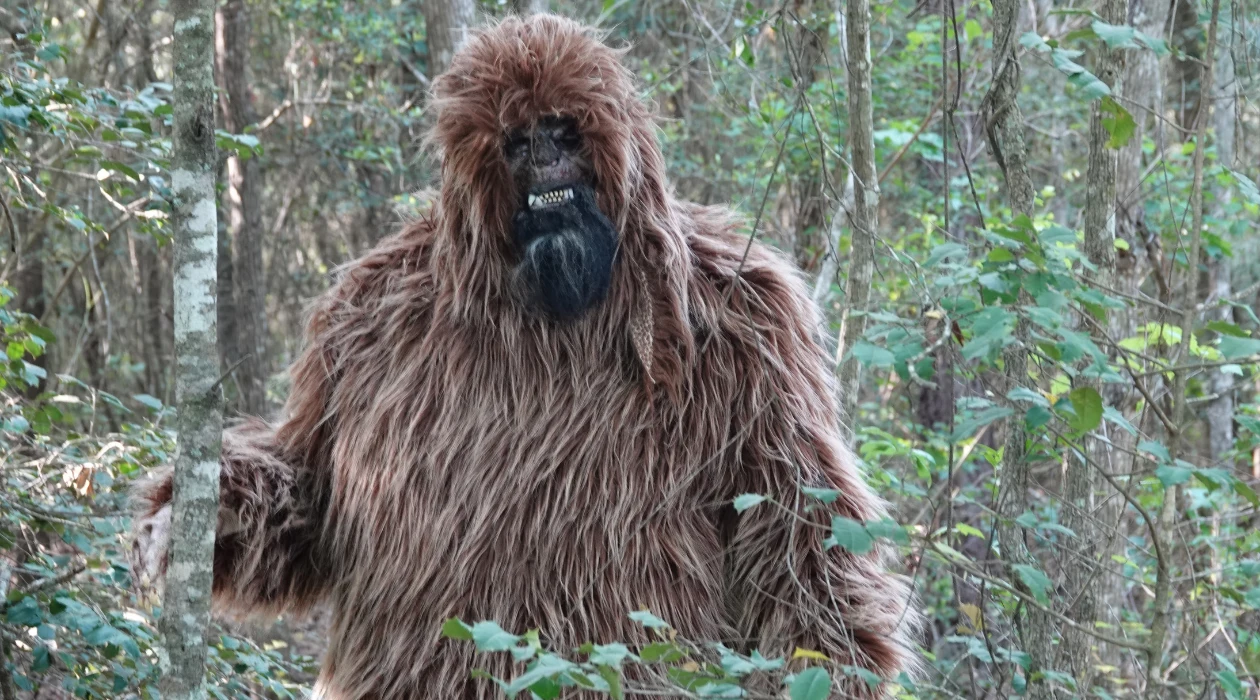
For generations, the mysterious creature known as Bigfoot has fascinated people across North America. Some see it as folklore, while others treat it like an unsolved mystery hiding deep within dense forests and rugged mountains. What makes the story even more interesting is that the legend of Bigfoot is not frozen in time. Instead, it continues to grow, evolve, and inspire new stories.
In recent years, the world of cryptids has expanded dramatically. New regional creatures have appeared, adding fresh layers to the broader Bigfoot mythology. One of the most intriguing developments comes from the mountains of Oklahoma and Arkansas, where filmmaker Master Hughes has helped shape modern stories about the Kiamichi Beast and the Ouachita Beast.
This raises an interesting question. Is Bigfoot simply a legendary creature, or is it the starting point for an entire ecosystem of modern folklore?
The Enduring Mystery of Bigfoot
Bigfoot has been part of North American storytelling for centuries. Long before modern sightings appeared in newspapers or documentaries, Native American communities described large hairy beings living deep within the forests. Later, settlers arriving in these regions began telling similar stories.
Over time, the legend of Bigfoot spread across the continent. Witnesses described a tall, powerful creature walking upright, leaving behind large footprints and disappearing into remote wilderness. Reports came from forests, mountains, and valleys across the United States and Canada.
Why does Bigfoot capture our imagination so strongly? In many ways, the mystery feels like a living adventure story. Every footprint, strange noise, or unexplained sighting becomes another clue in an ongoing puzzle. Humans naturally love mysteries, and Bigfoot might be the greatest wilderness mystery of them all.
But legends rarely stay static. They shift and grow as storytellers reinterpret them. In the modern era, that evolution often happens through films, documentaries, and online storytelling.
The Rise of Regional Cryptid Legends
For many years, people told vague stories about wild men living in the forests. These stories were scattered and often lacked a clear identity. A creature seen in one valley might be described differently from one reported in another.
Modern storytelling has changed that pattern. Instead of general creatures, many areas now have specific named cryptids connected to local landscapes and history. These regional identities add depth and personality to the stories.
This approach has already shaped several famous legends. The Mothman became closely tied to West Virginia, the Jersey Devil became a symbol of New Jersey folklore, and strange reports connected to Skinwalker Ranch helped build an entire mythos around that location.
Now, the mountain ranges of Oklahoma and Arkansas are experiencing a similar transformation within the broader Bigfoot tradition.
The Kiamichi and Ouachita Mountain Legends
For over a century, communities living near the Kiamichi and Ouachita Mountains have told stories about large, mysterious creatures moving through the wilderness. These stories sounded very similar to classic Bigfoot reports. Witnesses spoke of massive hairy figures, unusual tracks, and strange sounds echoing through the forests.
Despite the similarities, these accounts never developed a unified identity. They remained scattered pieces of folklore passed between generations through campfire stories and local rumor.
That changed when filmmaker Master Hughes began exploring the region and documenting the mystery.
Through his trilogy Kiamichi Beast Expedition (2021), Kiamichi Beast Expedition 2 (2022), and Trail of the Kiamichi Beast (2023), Hughes introduced a specific identity to the creature by naming it the Kiamichi Beast. His work connected numerous local stories into a single narrative centered around the wilderness of southeastern Oklahoma.
His later film The Ouachita Beast Incident (2023) expanded the legend into Arkansas, suggesting that the creature’s territory stretches across the Ouachita and Kiamichi mountain ranges. By linking these two geographic areas, the story transforms into a larger ecosystem where creatures similar to Bigfoot could theoretically move freely across state lines.
Master Hughes and the Creation of Modern Cryptid Mythology
Storytellers have always played an important role in shaping folklore. In the modern era, filmmakers and digital creators can influence legends in powerful ways.
Master Hughes approaches the mystery not only as a filmmaker but also as an explorer. His projects involve repeated expeditions into remote mountain regions where sightings have been reported.
One of the key elements of his storytelling is historical framing. Hughes presents the creature not as a new phenomenon, but as a being with a history that predates Oklahoma’s statehood. By placing the legend within early settler history and regional narratives, he creates the sense that the creature has existed in the area for generations.
Another important aspect of his work is the search for physical evidence. His films often show him exploring dense forests and mountainous terrain in search of tracks, unusual forest structures, and other clues that might suggest the presence of a large unknown creature.
What makes his approach unique is the immersive style of storytelling. Rather than presenting a polished, high-budget documentary format, his films often feel raw and immediate. The viewer follows his investigations as if joining a field expedition through remote wilderness.
This style creates a sense of realism that resonates strongly with the cryptozoology community.
Turning Local Stories Into Global Folklore
In the past, stories about mysterious creatures rarely traveled far beyond their local communities. A sighting reported in one mountain valley might remain unknown outside the region.
The internet and digital streaming platforms have changed that dramatically. Today, a filmmaker can take a local legend and share it with viewers around the world.
Master Hughes distributes his films through platforms such as Tubi, Prime Video, and YouTube, allowing audiences everywhere to explore the Kiamichi and Ouachita legends.
His production center is located close to the Houston area, and his projects continue to expand the mythology surrounding these mysterious creatures.
More information about his work can be found here:
https://www.imdb.com/name/nm10033383
Through digital storytelling, these regional legends are following the same path that once elevated other famous cryptids into worldwide folklore.
Why Cryptid Legends Continue to Fascinate Us
Stories about mysterious creatures have existed in human culture for thousands of years. They tap into our curiosity about the unknown parts of the world.
Forests, mountains, and remote valleys still hold a sense of mystery. When people hear reports of strange creatures like Bigfoot or the Kiamichi Beast, it sparks the imagination.
Think of it like exploring an old map filled with blank spaces. Those empty regions invite questions. What might be hiding there? What have we not discovered yet?
Cryptid legends thrive in those unanswered questions.
Conclusion
The legend of Bigfoot remains one of the most powerful pieces of modern folklore, but it is also constantly evolving. New regional cryptids such as the Kiamichi Beast and the Ouachita Beast demonstrate how storytelling can expand an old mystery into new forms.
Through exploration, filmmaking, and digital distribution, Master Hughes has helped transform scattered mountain stories into a connected mythology spanning multiple states. His work shows how modern creators can gather fragments of folklore, assign names, define landscapes, and share those stories with a global audience.
Whether Bigfoot and its regional relatives are real creatures or simply powerful legends, they continue to capture human curiosity. As long as unexplored forests and remote mountains remain, the stories will keep growing, and the mystery will never fully disappear.